The fish are on the screen. But is the offer genuine?
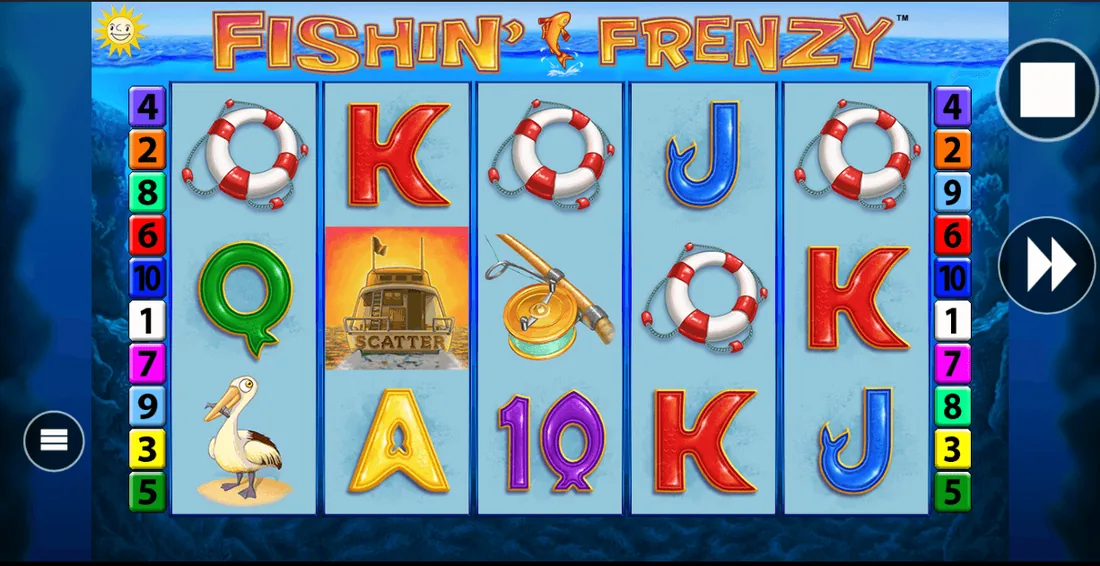
A reel flashes, the music rises, and a £10.00 balance suddenly becomes a line of animated fish and expanding prizes. The result looks convincing. The promotion promising a guaranteed bonus looks convincing too. Then the app asks for card details, the promised cash never arrives, or the winnings vanish behind another withdrawal condition.
That gap between a convincing screen and a trustworthy service is where most beginners get hurt. Fishin Frenzy may be a genuine game supplied through a licensed gambling operator, but the game, the app, the advertisement and the payment request are four separate things. A real game inside a fraudulent storefront is still a bad place to deposit money. Conversely, an unfamiliar-looking promotion is not automatically a scam if the operator can be checked properly.
What is actually real about the game
The honest answer is that the screen alone cannot prove authenticity. A cloned slot can copy the artwork, sound effects, symbols and even the layout of a legitimate provider. What can be established is the structure behind it: a game is produced by a software provider and offered by an operator under the operator’s UK Gambling Commission licence. The provider may also have its own certification, while the operator remains responsible for the site, the banking terms and the conduct of the promotion.
Fishin Frenzy is not automatically fake merely because it appears on a large casino site, and it is not automatically safe merely because the logo looks professional. The decisive question is whether the specific operator serving the player can be found on the UKGC public register and whether the licence number in the footer matches. A link embedded in a social post may lead to a different domain from the operator’s official presence, so the register should be used as the final check rather than the advertisement.
Where the scam usually appears
The software may be genuine while the business surrounding it is not. Fake advertisements often imitate a familiar casino brand and borrow the same reels used by legitimate promotions. The giveaway is not an unusual design; it is a demand to act through an unexpected private messaging app, an shortened-looking address, or a newly registered domain. Other campaigns show a celebrity or streamer who supposedly made a large win from Fishin Frenzy. No wagering requirement prevents a clip from being heavily edited or from showing a bonus balance rather than withdrawable cash.
- Deepfake videos in which a presenter appears to play the game and display a jackpot that was never actually credited.
- Fabricated screenshots showing a large balance with no matching transaction, game history or withdrawal record.
- Affiliate links that redirect through several advertising services before opening a cloned or newly registered casino.
- Fake mobile apps distributed outside the Google Play and App Store, often requesting excessive device permissions or card information.
- Bought reviews and copied testimonials that make a new operator appear established when its public record says otherwise.
- Support agents who move the conversation to private chat and pressure the player to deposit again to release supposed winnings.
Another common trick is the loyalty promotion. It may advertise £10.00 in free play, then impose a wagering condition so large that the expected practical value is poor. Because every real-money casino bonus has conditions, their presence is not proof of fraud. Fraud appears when the offer is presented as guaranteed, the terms are concealed, or the operator asks for a payment that the advertised promotion does not require.
A one-minute authenticity check
Begin with the operator, not the reel. Find the licence number in the footer, open the UKGC public register independently and compare the legal entity and domain shown there. Do not use a search advertisement as a substitute for the register. Then open the game information panel inside the operator’s site and check the provider, rules, stake controls and bonus terms. The game name alone is not a unique identifier because convincing clones exist.
- Confirm that the site footer displays a UKGC licence number and the UKGC register lists the same operator and domain.
- Check that the withdrawal rules, operator contact details and game information are presented before registration.
- Compare the displayed provider and game rules with the provider information supplied by that operator.
- Reject any demand to install an APK, send money to an individual or pay a release fee to unlock winnings.
- Test the account without rushing into a deposit: open the rules, adjust the stake, inspect the history and check whether support answers clearly.
| Signal | What it suggests | Safer response | |
|---|---|---|---|
| UKGC register and licence number in the footer match | The operator is subject to the UK regulatory framework | Continue checking game and payment terms | → |
| Bonus appears in social clips but is absent from the account | The advertisement may be fabricated | Close the promotion and use the operator’s own site | → |
| Only an unofficial app is offered | It may be a clone carrying malware | Use the official app store listing for a licensed operator | → |
| Support asks for more deposits before withdrawal | This can become a recovery-payment scam | Do not send more money; check the published terms | → |
| The operator cannot be found in the UKGC register | The service is not authorised for the UK market | Do not deposit | → |
What being legal actually changes
Online casino play is legal in the United Kingdom when the operator holds a UKGC remote licence. The regulator’s presence changes more than the wording in the footer. It means there is a named accountable operator, published rules, a complaints process and oversight beyond the casino itself. It also means the player can use GAMSTOP, BeGambleAware and the operator’s own deposit, loss and time controls. A game licensed elsewhere but marketed to British customers without an appropriate UKGC remote licence is not made legal by having a polished interface or an English-language support desk.
Real-money operators must offer deposit limits and apply affordability checks where relevant, beginning with £150 in net deposits over a month. Slot stakes are capped at £5 per spin, or £2 for players aged 18–24. The operator may also request age and identity verification before depositing, with documents needed before the first withdrawal. That first withdrawal often takes longest because it is the point at which the account, payment method and ownership details are checked.
Payment names should be in the player’s own name, and credit cards are banned for gambling. Common UK options include debit cards, PayPal, Apple Pay, Open Banking through Trustly and paysafecard. Typical published withdrawal windows range from a few hours to 24 hours for e-wallets, the same day to two working days for Faster Payments, and one to three working days for a debit card. These are service ranges, not guarantees for a cloned site or an account under investigation.
The bankroll trap hiding behind the excitement
The dangerous part of Fishin Frenzy is often not a fake result but a real one. A winning sequence can produce a memorable balance, prompting a quick increase in stake. A near miss can make the next spin feel overdue. A bonus balance can create the illusion that the original deposit is already protected. None of this changes the underlying mathematics: slots use chance, long losing runs are normal, and volatility can make short sessions appear unusually dramatic in either direction.
Wagering exists whenever a bonus or free spin is involved. The requirement may be expressed as a multiple of the bonus, and certain games may count differently under the published rules. Because terms vary, a player cannot calculate the practical cost of an offer by looking only at the headline amount. The same applies to cashback, tournaments and loyalty rewards. Reading the wagering requirement, maximum conversion rule and expiry period is the difference between choosing an offer and accepting a trap.
- Set a deposit limit before the first spin, not after the balance falls.
- Treat a bonus as a condition-laden offer rather than free withdrawable money.
- Avoid chasing a previous loss by raising the stake or making an unplanned second deposit.
- Use small, repeatable stakes and record sessions so emotion does not choose the limits.
- Remember that a first withdrawal may need identity documents and may therefore take longer than the next one.
A sensible boundary before depositing
The most useful boundary is not a winning system but a decision made before play begins. Check the operator independently, read the bonus and withdrawal rules, set a cash and time limit, and use the stake caps as hard boundaries rather than suggestions. Demo mode can help with the mechanics, although on many UKGC sites it is visible only after logging in and completing age verification. A free-play version can show how the reels work; it cannot establish whether a real-money operator will pay correctly.
GAMSTOP is the central UK self-exclusion route. One registration blocks access across UKGC-licensed sites for the selected period, while BeGambleAware provides support and further tools. These services are there to interrupt a pattern that has already become difficult to control; using them early is more effective than treating them as an admission of failure. An operator may also offer deposit limits, reality checks, session reminders and account closure.
The verdict a beginner can act on
Fishin Frenzy is not, simply by virtue of its name or appearance, proof of a scam. The game can be legitimate, but the surrounding app, influencer post, referral link or cloned site may still be fraudulent. The correct conclusion is conditional: trust the operator only after matching its footer licence to the UKGC register, and trust the offer only after reading its terms inside that operator’s site.
The minute-long check should answer three practical questions. Is the operator authorised? Is this the operator’s genuine game rather than a copied interface? Are the bonus, payment and withdrawal conditions visible and acceptable? If any answer is no, the player should not deposit. If the answers are yes, the remaining decision is still about entertainment and bankroll, because a licensed game with published mathematics can produce losses, long dry spells and bonuses that are expensive to convert.
- Real game: the provider and rules are identified by a licensed operator.
- Fake surroundings: cloned pages, invented wins, unauthorised apps, bought reviews and urgent payment requests.
- Legal route: a UKGC-licensed operator, age verification, £5 or £2 stake caps, deposit controls and affordability checks.
- Sound approach: fixed limits, no chasing, careful bonus evaluation and a withdrawal plan before chasing a larger session.
The strongest scam signal is not a disappointing game. It is pressure to bypass verification, pay somebody directly, install software from an unofficial source or keep depositing so a supposed prize can be released. The real Fishin Frenzy does not need any of those tactics. A genuine operator can explain the rules, verify the account and provide a clear withdrawal route.
FAQ
Is Fishin Frenzy a scam?
The game itself may be genuine, but that does not validate every site or promotion using its name. Check the operator on the UKGC public register, match the licence number in the footer and confirm the provider and rules on the operator’s own site. Clone games and fabricated promotions can use the same artwork.
Can I play Fishin Frenzy for free in the UK?
Demo or free-play versions are common on UKGC sites, but many show them only to logged-in, age-verified accounts. Free play is useful for learning the interface, but it cannot demonstrate the randomness, deposit controls or withdrawal performance of the real-money service.
Are the Fishin Frenzy promotions shown by streamers real?
Not automatically. Clips can be edited, show non-withdrawable bonus balances or belong to an unauthorised clone. Verify the operator independently rather than following the creator’s link, and check whether the same bonus and terms appear on the licensed site.
Why is my first withdrawal taking so long?
The first withdrawal commonly requires age and identity documents and verification that the payment method is in your own name, so 24–48 hours can be normal. Later e-wallet withdrawals may take a few hours to 24 hours, while Faster Payments and debit-card timings can be longer. The exact terms of the licensed operator should be checked before depositing.
What should I do if the casino asks for another deposit to release my winnings?
Stop and read the original withdrawal terms. Legitimate bonus conditions must be published and explained. A demand for an extra payment, release fee or gift card is a serious warning sign, so do not send it. Check the operator’s record, contact its published support channel and use GAMSTOP or BeGambleAware support if the gambling itself has become hard to control.